Harmattan AI and Qatar’s Barzan Agree to Demonstrate Gobi Tempest Drone Interceptor
The memorandum covers demonstrations of an interceptor that Harmattan AI says flies up to 12 kilometers at speeds of up to 310 km/h.
- Country
- Qatar
- Buyer
- Barzan Holdings (Qatar)
- Seller
- Harmattan AI
- System
- Gobi Tempest
- Value
- Not disclosed
- Contract type
- Memorandum of understanding
- Announced
- November 6, 2026
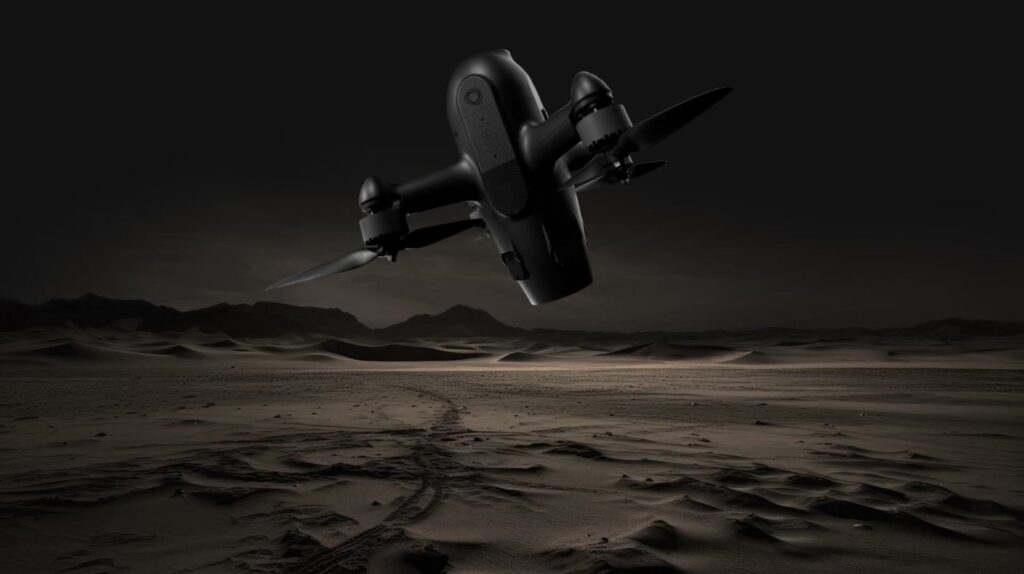
Harmattan AI and Barzan Holdings of Qatar have signed a memorandum of understanding to advance Harmattan AI’s autonomous very short-range air defense capabilities in Qatar and other markets. Harmattan AI announced the agreement on November 6.
Under the memorandum, the companies will demonstrate Harmattan AI’s autonomous systems, including its Gobi Tempest interceptor and its mission orchestration system. The announcement gives no value, quantities, deployment plans or timeline, and no order has been announced.
Barzan describes itself as Qatar’s defense and national security leader and serves as the commercial gateway for the country’s military industry. Group Chief Executive Mohammed Bin Bader Al Sadah said Barzan’s priority is safeguarding Qatar’s sovereignty and critical infrastructure.
Harmattan AI builds autonomous systems for air defense, surveillance, strike, electronic warfare and command and control. It said its very short-range air defense systems, both kinetic and explosive, were recently used in engagements with several NATO and allied forces, without giving details. “When facing a swarm of hostile drones, only a solution made of attritable, industrially scalable, autonomous systems can ensure the security of a strategic site,” Chief Executive Mouad M’Ghari said.
The Gobi Tempest Interceptor
Gobi Tempest is designed to engage Group 2 and 3 drones, according to the company’s product page. It cruises at 215 kilometers per hour, reaches a top speed of 310 kilometers per hour and has a flight range of 12 kilometers. It can carry an 800-gram warhead and weighs 5 kilograms with batteries and warhead.
The interceptor is kept switched on inside a launch box and is ready to take off in three seconds. Once launch is authorized, it checks the engagement parameters, confirms that an intercept is possible and works out its own engagement solution. Onboard sensors refine the impact point in the final phase. The full system includes the launch box, a ground radar, an electro-optical and infrared turret and command and control that can be linked to other command systems. An operator stays on the loop, and the system works day and night in all weather.
Growing Defense Ties
Harmattan AI raised $200 million in a funding round led by Dassault Aviation in January, The Defense Post reported. In June, France ordered 5,000 of the company’s Sonora surveillance drones, expanding a 2025 order for 1,000.
In October, Rheinmetall Barzan Advanced Technologies, its joint venture with Germany’s Rheinmetall, signed a memorandum with Shield AI to explore autonomy software for Qatari uncrewed surface vessels, The Defense Post reported.

Do you build parts of these systems?
DefMatch is the Defense Capability Exchange from The Defense Post. Find your company profile, claim it, and get in front of the people buying air defense.