Raytheon Picked to Digitize US Space Force Early Warning Radars
The program starts with prototypes and then moves to the remaining radar sites. No value was disclosed.
- Buyer
- US Space Force
- Seller
- Raytheon (RTX)
- System
- Ground-Based Radar Digitization, early warning radars
- Value
- Not disclosed
- Announced
- October 15, 2026
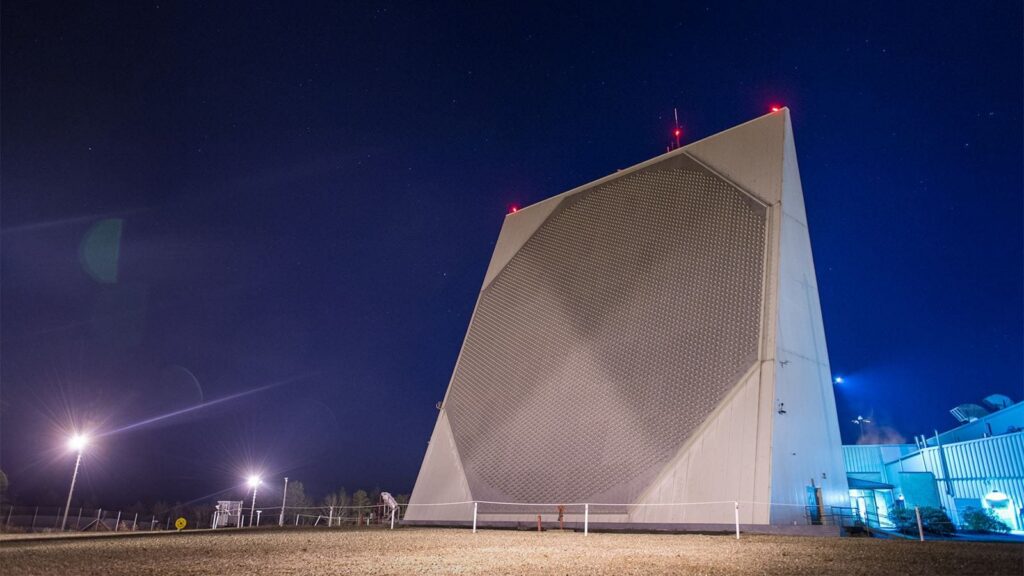
Raytheon has been selected to modernize the US Space Force’s early warning radars under the Ground-Based Radar Digitization program, parent company RTX said on October 15. The value was not disclosed.
The radars are part of the US missile defense network. They give early warning of missile launches, help work out what a detected object is, and track activity in space.
The work will replace or update the radars’ digital systems and put them on a common, open architecture. Raytheon said that should make the radars easier to maintain, reduce dependence on any one vendor and speed up later upgrades.
The program begins with prototypes. Wider fielding at the remaining sites follows. RTX did not give a schedule or the number of sites.
Sam Deneke, president of Air and Space Defense Systems at Raytheon, said digitizing the radars is needed to keep ahead of more complex threats.
Old radars and new ones
The program is one part of a broader effort to update the ground sensors behind US missile warning. The older radars have to keep running while newer ones come into service.
The Space Force operates the Upgraded Early Warning Radars to detect ballistic missile attacks and track objects in space. Earlier upgrades replaced much of their radar and computer hardware and rewrote their software.
Newer sensors are arriving too. In December 2025 the service accepted the Long Range Discrimination Radar in Alaska for operational use in missile warning and tracking.
A separate system, Space Fence on Kwajalein Atoll, watches satellites and debris in low Earth orbit. It became operational in 2020.

Do you build parts of these systems?
DefMatch is the Defense Capability Exchange from The Defense Post. Find your company profile, claim it, and get in front of the people buying air defense.